Google

Browsing Posts tagged Hungary

Vietnam bike

In the Old Quarter of Hanoi

So much information spins past us every day that it’s hard to take a break and process it, much less record it for later. So here are a few travel articles I wrote or I’m in that have appeared recently. Lots more to come as the year goes on, but I’ll continue to try to keep the broadcasting to a minimum.

Some of my recent travel writing

Camelbak All ClearThe Viator Blog published a piece I wrote on the Buda side of Budapest.

Global Traveler magazine published an article on my time in Hanoi this past summer with my family – Hanoi: Up to Speed

I also had one in there on Mexico City at Night and did a short web piece on the new Microsoft Windows tablets.

Over at Practical Travel Gear, where I’m editor, we all rounded up our picks for the best travel gear of the year in 2012.


Some shout-outs from others on The World’s Cheapest Destinations

Kara from The Vacation Gals was the first to put up a review of the new edition.

EuroCheapo asked me 4 Cheapo Travel Questions

This time last month I did an interview with Gadling on cheap travel destinations.

I had fun participating in this Round-the-world chat with Adam and Sean from BootnAll via Google+ and Twitter.

You can always keep up with me via the RSS feed here or by following me on Twitter – @TimLeffel.

It’s time for the October issue of Perceptive Travel, home to the best travel stories from book authors on the move. If you’re new here, I post this each month because I’m the editor and founder of this award-winning pub, which launched in 2006. Speaking of awards, thanks to all of you who saw the newsletter or Facebook posts and voted for our bloggers in a contest that Avis UK was running. We won for Best Group Travel Blog. Nice!

In this issue, New Yorker Becky Garrison has mixed feelings when she picks up a book from Lonely Planet called Secret New York. Will her favorite escapes be called out? Will she ruin the other secret spots people like her have cherished? See Keeping Secret Spots in New York City.

I travel to another iconic city, Budapest, and see the horrible history in the House of Terror museum juxtaposed with a happy Hungary finally emerging from the darkness. See Bouncing Back From Terror in Budapest.

Tom Koppel returns with an adapted excerpt from his new book, Mystery Islands. He looks at the lost, then found, art of hand-carving canoes that can whip across the waters between small atolls in the South Pacific. See Racing Hand-carved Canoes in Micronesia.

The October 2012 world music reviews cover four albums from two continents, reviewed by Laurence Mitchell. One of our regular book reviewers, Susan Griffith, highlights three interesting new travel books on a mostly ignored area of South America, the walking paths of Britain, and a $10 bill’s path across the USA.

Last month one of our readers scored a personal travel hammock from Eagle’s Nest Outfitters. This month we’re getting someone geared up with clothing from Polarmax: a fancy base layer top and two pairs of All Year Gear travel underwear. See the home page for links and either sign up for the newsletter or join Perceptive Travel on Facebook to get in on the action each month.

Children's railway

Most travelers don’t see much of the Buda side of Budapest when they visit Hungary’s capital. Few make it any further than the Fisherman’s Bastion and maybe Buda Castle.

It’s understandable as most of the bars, restaurants, and hotels are on the flat Pest side. But Buda has the greeenery—and the Children’s Train.

I probably wouldn’t have even known about this train had I not gone out on a cool tour with Underguide that spent the day on the other side of the river. (Remember that when you automatically pooh-pooh guided tours: some of them rock.) We took a series of metro rides and trams, then hiked the last bit to the starting point. So getting there was part of the fun too.

Here’s what the ride was like:

This is one of those classic narrow-gauge trains that bumps along old tracks. This one passes through forests and behind some grand homes in the hills. It’s a world away from the compressed urban grid of Pest.

HungaryIt’s called the Children’s Train because kids aged 10-14 join a program to work there, taking tickets and giving signals to conductors when the tracks are clear. The tickets are a bargain at about $3 one-way, or $1.50 for children.

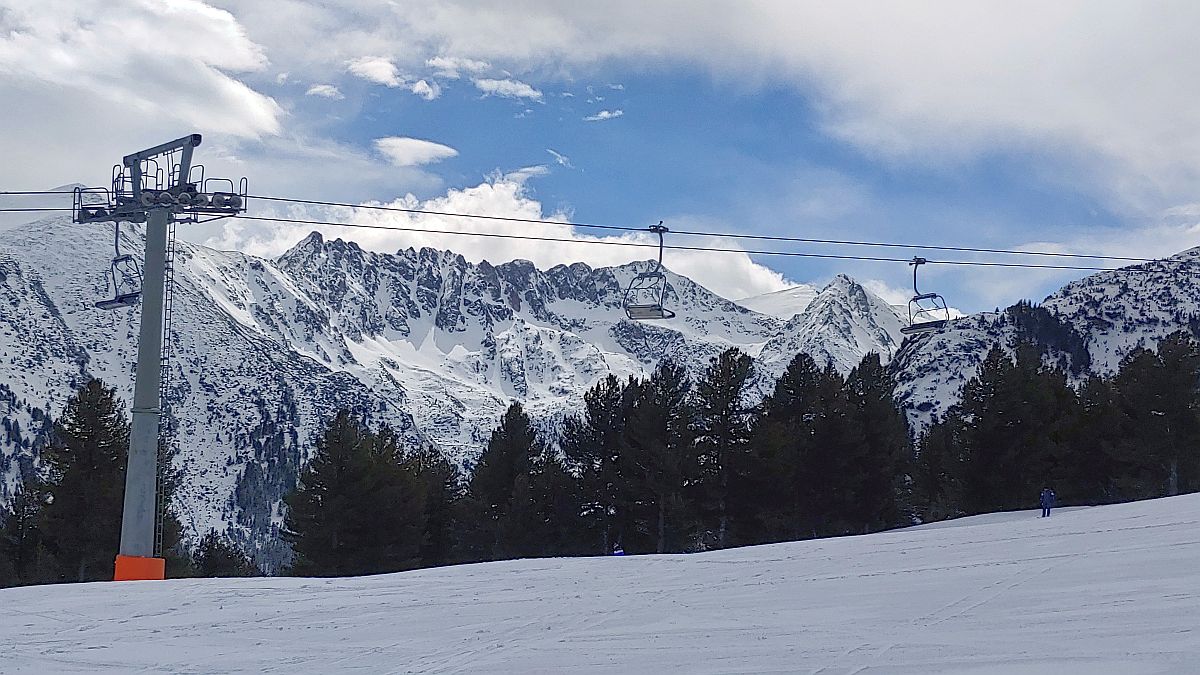
When you get to the end, you can turn around and come back or follow a path to a chairlift going up and down the mountain. I’d advise taking it down as you get terrific views of the mansion districts and the city spread out before you. The chairlift is slightly more than the train, around $3.25 one way.

Budapest chair lift

See more on the Children’s Railway site in English.

Budapest

In my recent jaunt through the countries that are the best value in Europe, I spent the last of it in one of my favorite cities: Budapest. Last time I was there I was using it as a base to explore other parts of the country, but this time I just stayed put and soaked up the atmosphere of Buda and Pest.

Imagine visiting your local wine bar and ordering three different varieties from assorted regions, being served by someone who can explain the climate there and what awards that vintner has won. The chalk board list behind the bar has over 100 wines by the glass to choose from and there’s something for every taste. The interior is elegant and the location is perfect, right across from a busy pedestrian plaza fronting the city’s huge historic cathedral. It’s the kind of place you could linger for hours, but how much is it going to cost you when the bill comes?

$8.50 with tip.

That’s what I spent at the best wine bar in Budapest. For three glasses that took my taste buds on a terrific ride, from three distinct wine regions of Hungary.

I bring that up first because it’s emblematic of the appeal of Hungary. This is not the ideal bargain backpacker city and it’s thronged with tourists that are firmly in the middle of the pack budget-wise. After all, the Hungarians consider themselves “Central Europe” and they are right next to expensive Austria. They’re on the Danube, with docking river cruise ships a defining feature of the waterfront. So this is a value destination, but the best deals are for those on a vacation budget rather than a shoestring budget. Think “value” more than “cheap.”

As I write this though, Europe is a financial mess and Hungary is doing worse than many others. It’s part of the EU, but is not on the euro, so when that currency falls, the forint often falls even more because of domestic problems. You can currently get 230 forints for a U.S. dollar. I can’t promise you that’s going to last, so keep exchange rates in mind if you land on this post later—I’m writing this in mid-2012 and used 220 to the dollar for my calculations.

Hotel and hostel prices in Budapest

Budapest is a very popular city. There are bargains in hotel prices, but they’re more like getting a Four Seasons room for under $350 than finding a great budget room for $15. The sweet spot of choice is between $60 and $100 a night, where you’ll often find 40 places or more to choose from on sites like HotelsCombined or Expedia. But I strongly advise using Hotwire, because that’s when you see the true bargains. Searching mid-July prices right now, there are 3-star hotels for under $35, 4-star ones for under $45, and one 5-star one listed for $67!

Real estate has historically been pretty cheap here, so there are probably at least 50 hostels to choose from. Expect to pay between $12 and $18 a night for a bed in a dorm room, which is certainly better than most countries west of here in Europe. Check Hostelbookers.com, where there’s no booking fee.  Internet is free at every hostel and most hotels 3-star or less. Many include breakfast, where you’ll see plenty of protein on the trays.

Food and drink prices in Budapest

If you’re a tourist on vacation, Budapest will feel like a terrific bargain come dinnertime. Sure, you can spend $200 each on a 6-course tasting menu at the city’s finest restaurant if you want, but you can normally have a very fine cloth-napkin dinner with wine for $15. If you eat at more humble places, a soup will be a dollar or two and main dishes range from $3 to $7. For my last dinner in town, for example, I had soup, a paprika pepper stuffed with ground pork, bread, and two glasses of house wine for under $10. I walked down the street and got a $1.25 strudel pastry that was terrific.

Hungary

If you buy things in the market for a picnic or self-catering, prices are at the low end for Europe, say a tad more than Bulgaria but a lot less than Germany. You can get rolls for 10-25 cents each or a huge baguette for a dollar or less. Get 100 grams (around 1/5 of a pound) of good cheese for a dollar, 100 grams of good local sausage for $2, and a jar of pickled veggies for another dollar or so.

For a buck or less, you can generally buy 100 grams of any of these things in the market: raisins, peanuts, sunflower seeds, banana chips, or dried apricots. For a buck or less you can get a kilo of seasonal fruit or peppers, cabbage, potatoes, radishes, or carrots. I saw a big bunch of white asparagus for about a dollar when I was there. How much do you pay for that in your local farmer’s market?

As in most of the old Iron Curtain countries, alcoholic drinks are the real bargains. (Some say alcohol is what really fuels RyanAir’s business: all those Western European residents flying to cheaper cities to get wasted on cheap booze.) The weekend streets of Pest are filled with hen and stag weekend revelers buying $1-$2 beers in the pubs—less at happy hour—and shots of palinka for even less. The latter, which is distilled liquor make from plums or other fruit, ranges from 50 cents for the rot-gut versions to $3 for something refined you can sip before dinner. Almost anywhere though you can get a small glass for around a euro, straight up or in a cocktail.

coffee pastryHungarian wine should be known around the world, but the Soviet occupation days seriously hurt its reputation and the recovery will be a long one. So for now it’s one of the best bargains in Europe. Sample a lot of it here and you’ll be glad you did. You can find a decent bottle in a store for $2, something quite good for $4 to $8. If you spend over $10 you might end up with something from a “winemaker of the year” who has adorned local magazine covers. In general, get reds from the south or Eger, whites from Lake Balaton, and dessert wine from Tokaj.

This once being part of the Austro-Hungarian Empire, you can get a killer coffee and pastry here just as you can in Vienna—but for literally 1/4 the price. After you do a double-take at your low bill in a wine bar, finish with a coffee and dessert for another nice surprise.

Transportation prices in Budapest

My biggest negative surprise in Budapest was how expensive the subway has gotten for locals. The cheapest ticket (5 stops or less) is a dollar but a longer one is $1.50. A 24-hour pass is $6, a monthly one $45. If you get the local Budapest card—see the end of this post for a giveaway—unlimited subway rides are included.

BudapestA taxi from the airport to the center is around $35, but going the other way it’s half that. In general you can get around the center in a cab for $2 to $5.

The locals are bike-crazy and a lot of the main avenues have marked bike lanes. Some hotels and hostels have loaner bikes available, but you can also find rental kiosks with prices from $5 for four hours to $9-$12 for 24 hours.

I rode a cool narrow gauge Children’s Train on the Pest side of the city when I went on a tour with a Budapest Underguide. That was $6 one way, half for students. We took the chairlift down that mountain and that was around $3.

Museums and attractions in Budapest

This is not a city where you want to go on a whirlwind sightseeing tour unless you’re using the Budapest card. That gets you a discount of 10-50% and free admission to a few (like the zoo). The card is 3900 forint for 24 hours, or about $18.

Otherwise, some attractions and museums are free, like the Fisherman’s Bastion and the cool central bank visitor center, which is a money museum. Others, like the depressing but fascinating House of Terror Museum, cost money but are worth it. That one’s $9. The popular Memento Park, with all the old communist statues, is $7. The public baths Budapest is famous for are also going to cost you. Non-locals pay $16 for an unlimited time of soaking and steaming at the major ones.

Win a Budapest Card!

The Hungarian Tourism people covered some of my expenses in Budapest as I am writing a feature story on the city for another publication and updating my book. They gave me two Budapest Cards but I only needed one. So courtesy of Hungary Tourism, I’m giving away I gave away a free 24-hour Budapest Card that’s good until March of 2013 to Josh A. of Louisville, KY. He”ll get unlimited local transportation and loads of discounts on attractions and restaurants. Congrats Josh—have fun!

Thanks to all who commented below to enter, telling me when you’re going, what attracted you to Hungary, and where you live.


The past couple weeks haven’t been so hot for airline passengers in Europe.

On January 30, Spain’s SpanAir abruptly shut down, leaving some 22,000 ticket holders stranded. It had been propped up with nearly $200 million in subsidies, a situation that was hard to justify given Spain’s precarious financial condition.

At least Spain still has Iberia though, its flagship carrier. Hungary is not so lucky. The Hungarian airline Malev just went kaput over the weekend. This piece in Jaunted says the airline accounted for half the traffic at Budapest’s airport, which surely isn’t a good sign for that city’s tourism numbers this year. (Note to contrarian travelers—that means it’s time for you to swoop in and take advantage of the sale prices.) Maybe it was the branding: the airline’s full name was “Magyar Légiközlekedési Vállalat.”

I’m flying to Hungary myself in April. I actually thought for a few seconds about buying a ticket on Malev because it was one of the cheapest ones. Then I figured out I could easily get a ticket using American Airlines frequent flyer miles. Apparently those aren’t in such demand since American Airlines is bankrupt. Hopefully they can hold on through the spring at least.

Oil is stubbornly sitting at around $100 a barrel and will likely go up rather than down. Iran keeps treating provocation as its favorite sport, a power-hungry nutjob runs Venezuela, there’s civil war and terrorism in Nigeria, possible civil war in Libya, all hell breaking loose in Syria, a contagious financial funk in Europe, and still a very weak housing market in the U.S. that’s keeping our economy from taking off—and our airlines from increasing capacity. Yes, if you want to fly somewhere internationally, you probably need to pay more than you would like or you have to get really good at travel hacking for free trips. That’s the reality of travel in 2012.