Google

Browsing Posts tagged Central America

Cheap travel Central America

There are a few clusters of cheap destinations around the world where you can travel overland from country to country on a low budget for weeks, months, or a year. For Americans, starting in Mexico and going down to Panama is a pretty reliable way to travel well without spending a fortune—especially since the initial flight won’t set you back too much.

There are major variations of course, which is why Nicaragua is a screaming bargain, Mexico is an “honorable mention” in my book, and Costa Rica isn’t in there at all. Even that last one and Belize will cost you less than home if you pick the where and how carefully, however, so all in all it’s a good block for long-term travel.

A month ago I updated my old article for Transitions Abroad on Budget Travel in Mexico and Central America. It’s an article, not a book, so it’s just going to give you a quick overview. It does give you a quick overview for the region though on sleeping, transportation, and eating/drinking. Plus there are ample links at the end to resources to find out more.

I like Mexico so much I have two houses there. (Though I’d like to bring that down to one. Beach house for sale – $68,500.) It’s no bargain if you go to Los Cabos or the Riviera Maya, but in the interior and many off-the-radar beaches, it’s a whole different story. In Nicaragua, Honduras, and Guatemala, it’s a bargain throughout.

So do a little planning, but follow the article to decide if it sounds like a region where the price is right.

I focus on the practical aspects of travel a lot on this Cheapest Destinations Blog. I figure there are enough others out there doing a “photo of the day” and making virtual albums of their travels.

Still, sometimes a place is beautiful and you just want others to see what you saw.

Nicaragua is not a country you visit so you can see famous museums, tick off landmarks, or get your mug shot in front of something 100,000 others have gotten their mug shot in front of. If you’re going to Nicaragua, you’re probably going to DO something, not just see something.

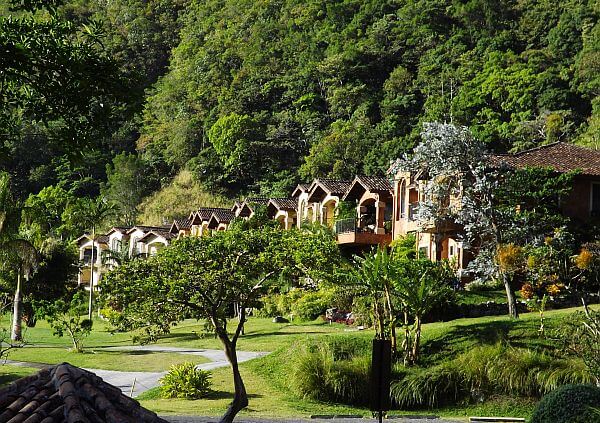
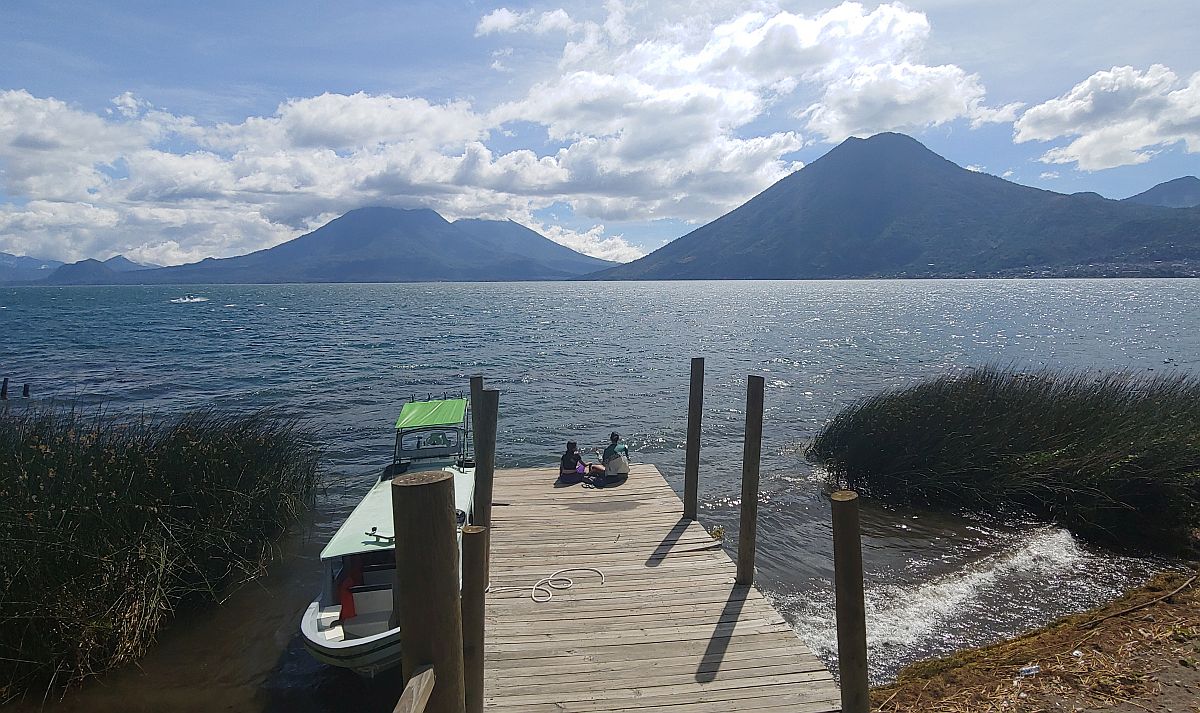
Still, there are plenty of feasts for the eyes, especially in Granada and on the Pacific coast.

Enjoy.

Back to the practicalities next week.


You won't believe your calculator if you figure this one out. But nice ribbons!

Currency exchange rates can make a huge difference in prices where you are going. Travel prices fluctuate a lot because of this and the exchange rate can take a country from a decent value to being way overpriced in the case of just a few years. It’s happened to Australia, Brazil, Canada, and South Africa most recently, and plenty of others before that. Here’s what to keep an eye on in the current roller coaster climate of global finance.

At least consider a package deal for a short trip

The only true way to protect yourself from currency fluctuations, really, is to buy some kind of package deal in advance that removes all variables. You pay one price for everything (or close to it) and you don’t have to worry much about rates on the ground once you get there. It’s one of the main reason some people like cruises: they know everything they’re going to get and roughly how much it’s going to cost them. No adventure, but no surprises either.

If I were advising a relative on a vacation to Europe anytime soon, I’d definitely tell them to get a package tour. Ironic and annoying as it may be, that bundling often makes it cheaper than being an independent traveler: the tour agency is negotiating lower group rates on flights, hotels, transportation, and meals. I can do better than them in a cheap country by being smart, but it’s tough to do better in an expensive one that requires a long flight, like Italy, Japan, or Australia. (For example, Budget Travel’s website recently listed a 7-day tour of Copenhagen and Stockholm for $1,187 from NYC per person: flights, fuel charges, hotels, breakfast, and taxes. Try working that out on your own.)

U.S. dollar vs. Swiss franc, past two years

Avoid Switzerland for now

Switzerland has never been a bargain, but suddenly it’s up there with Japan for the title of most expensive destination. That’s because the inability for the U.S. Congress to act like adults when managing their budget led to a downgrade of U.S. debt. (Despite what some think, all budgets have two sides to the ledger: spending AND revenue.) That left the Swiss franc as the only currency looking rock solid. Which means lots of countries and investors are buying Swiss francs by the bundle. In a big country, this wouldn’t matter, but for tiny Switzerland, it’s a disaster. It’s made the value of their currency rise by a third.

Check out this PlanetMoney podcast if you want the whole story, but the bottom line is an already expensive place just got crazy expensive. Ski elsewhere this winter.

Where have we been before?

It makes lots of sense to check historic exchange rates here. Thailand has been at 40 baht to the dollar and it’s been at 30. Your perception of what a screaming bargain this country is will be a whole lot different depending on what the rate was when you were there. When I first visited Canada many years ago, 70 U.S. cents bought one loonie. Now they’re at par, with the Canadian dollar slightly higher as I write this. Some things already seemed expensive at the lower rate—like cigarettes, music, books, restaurant meals, and beer. So imagine how it feels now. On the other hand, Mexico at 12 pesos to the dollar felt a whole lot better than the first time I went there, when it was 10 to the dollar. If the rate is good now, or if it’s going through some crazy up or down move that’s out of the norm, you’ll know what to do, based on how badly you want to go there right now.

Are they tied to the dollar?

As noted in this recent post on how you would think Africa would be a cheap travel destination, but it’s not, where the currency is pegged to matters a lot. If it tends to follow the euro, that’s different than if it follows the dollar. This matters in Africa, it matters in the Caribbean, and it matters in Asia: in all these places one country may be following the Euro, while one right next to it may be following the dollar or even the pound sterling.

Which brings us to Latin America. It used to be that all these countries moved in lockstep with the U.S., so the rates barely budged. That’s still true in some that use the dollar (Ecuador and Panama) and others that might as well, they track it so closely (like Honduras and Belize). There are a few outliers though, resource-rich countries with booming economies that are floating their own boat on the international exchanges, most notably Brazil and Chile. It’s been a good while since either of those were a bargain—though Chilean wine remains a fantastic value. And you should have lots of Brazilian music in your collection, of course.

Overall though, in a world of uncertainty, these are your best bets for stability for those making their money in U.S. dollars. These economies are strongly tied to the U.S. and their people are getting lots of remittances from relatives working there. Huge spikes or declines in the exchange rate don’t do anyone any good. So “steady as she goes” seems to be the mantra. You won’t get any big nasty surprises going to any of the Latin American countries profiled in The World’s Cheapest Destinations.

Here’s a chart on Argentina though, for comparison purposes. It’s not as dramatic as it seems if you look at the change in percentage terms, plus inflation there has eaten up much of the gain. And now the government is charging you $140 before you even leave the airport. Even factoring in all that though, it’ll certainly cost you far less than the country profiled in the other chart above. That’s really the key point: keep it all in perspective because the cheapest destinations will usually still be a better value than the most expensive ones, no matter what kind of European meltdown, Asian currency crisis, or political posturing in the U.S. is going on.


Argentina travel

Dollar vs. Argentine peso, past two years


I have relatives who live in the “mouse mouth” of a state whose name means “flowery.”

Do most of the people in Boca Raton, Florida even know? How about those people living in Amarillo, Santa Fe, San Antonio, or Palo Alto?

I didn’t know what half of them were myself before I really started learning Spanish. So if you’re in the same boat, here’s a cheat sheet you can follow next time you’re traveling through the American Southwest or heading off to Latin America.

San or Santa = saint or holy, as in San Francisco (St. Francis) or Santa Fe (Holy Faith)

Costa = coast, as in Costa Rica (Delicious Coast, sorta), or Costa Mesa (Table Coast, sorta)

Puerto = port, as in Puerto Escondido (Hidden Port).

Buena/Buenos = Good, as in Buena Vista (Good View) or Buenos Aires (Good Air).

Monte/MontaƱa – Mountain, as in Monteverde (Green Mountain) or the state of Montana

Palo = stick or stump, as in Palo Alto (High Stick)

Del = of the, as in Del Rio (Of the River)

Amarillo = yellow, Colorado = red, Alamo is a poplar tree.

Cruces = crosses, so Las Cruces (The Crosses), NM

Of course there are many others that don’t take much effort to figure out: Los Angeles (The Angels), Sacramento (Sacrament), Aguas Calientes (Hot Waters), El Paso (The Pass), Los Gatos (The Cats), Lima (Lime).

Funny enough though, Las Vegas, Nevada is “The Fertile Plains, Snowfall.” That map man was wasted!

“In 1492, Columbus sailed the ocean blue.”

But what was going on in the Americas before that? If you know much at all about that time, much of what you have probably been taught is wrong. That’s the core point of this fascinating book, 1491: New Revelations of the Americas Before Columbus, by Charles C. Mann.

The original hardback came out in 2006, but I just read the latest version on my Kindle, which was less than 10 bucks for something that’s 500+ pages in book form.

This is one of those mind-changing, big idea books that can really shake up your whole outlook on world history. The big idea is that the Americas were far more populated and far more developed than we used to think, with quite advanced civilizations—more advanced than comparable ones in Europe at the time in most cases. The main thing that changed all this was not colonialism or conquest, but the devastation brought on by European diseases, especially smallpox.

I could give you a scholarly rundown of what’s in here or offer my critical detailed review, but I think it’s more fun to just give you some fun facts I bookmarked along the way, starting with what’s behind the headline above.

* Native Americans developed around three-fifths of the crops now in cultivation around the world, including corn, tomatoes, peppers, potatoes, “all the world’s squashes,” and a good number of the beans. Before the Spanish and Portuguese started spreading things around, Thailand was without hot peppers, Italy had no tomatoes, and Ireland had no potatoes.

* Introductions went the other way too, of course. “Lawn grass did not exist in the Americas prior to Columbus.” There were no domesticated beasts of burden on either continent: the Maya, Aztecs, and Incas had to do it all by hand and foot. No “banana republics” before: bananas were brought from Africa.

* “In 1491, the Inka ruled the greatest empire on Earth. Bigger than Ming Dynasty China, bigger than Ivan the Great’s Expanding Russia…bigger than the cresting Ottoman Empire.”

* “When Columbus landed…the central Mexican plateau alone had a population of 25.2 million. By contrast, Spain and Portugal together had fewer than ten million inhabitants.”

* The image of the nomadic and simple American Indian is mostly false. Much of the continent was highly cultivated for thousands of years. The Hopewell civilization in what’s now southern Ohio may have controlled an empire extending across the current U.S, peaking in 400 AD. “Into the Midwest came seashells from the Gulf of Mexico, silver from Ontario, fossil shark’s teeth from Chesapeake Bay, and obsidian from Yellowstone.”

If you’re interested in the history of where you’re traveling through while in Latin America or just want to find out how recent discoveries have changed what we know about the world from Canada to Patagonia, you’ll learn more from 1491 than from any college history course.