Google

Browsing Posts tagged airlines

Want to fly around the world, but you don’t want to wing it as you go? With a round-the world ticket (or around the world ticket if you’re covering all the bases when Googling), you can set up your main airport stops in advance. When you’re ready to book it, your flight plan is set. Write one check or input your credit card once and you’re off and running for a year.

As you’ve probably noticed if you’ve done any research on this though, the prices are all over the map—because the choices are all over the map. So which routes are the cheapest? And which would cost you your whole travel savings for the year?

To get an answer to these questions, I posed them to someone I know at Airtreks, one of the best-known and longest-established companies selling round-the-world tickets. Nico Crisafulli handles public relations for the agency, so I asked him for some insider tips.

The Cheapest Round-the-World Tickets

“We do well with getting from the U.S. to Asia, Asia to Europe, U.S. to Europe (and vice versa), and locating killer combination fares throughout those continents. We find big discounts by stringing together two or three one-way tickets. We also have deals across the South Atlantic and Indian Oceans.

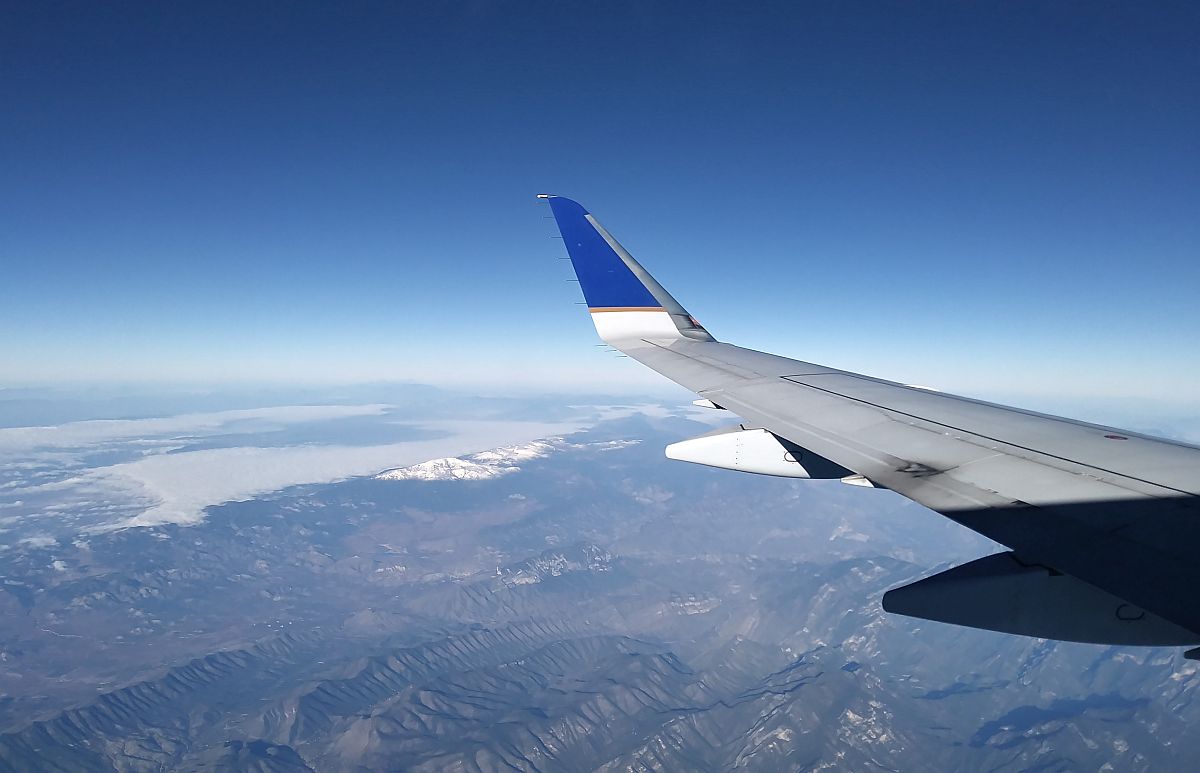
around the world

On their site this week, for instance, is a good RTW combo for hitting a good number of inexpensive destinations, from $2,400 to $3,000 depending on season:

New York – Hong Kong – Singapore – surface – Kuala Lumpur – Cochin / Kochi – surface – Bombay / Mumbai – Cairo – Istanbul – surface – Athens – Vienna – surface – Paris – Reykjavik – New York

There’s another that hits Munich and Rome near the end instead, for about the same price.

Here’s another route, similar price:

New York – Vancouver – Shanghai – surface – Kunming – Chiang Mai – surface – Kuala Lumpur – Cochin / Kochi – surface – Goa – Delhi – London – New York

And one more for the west coasters:

Los Angeles – Tokyo – Singapore – Kathmandu – surface – Delhi – Istanbul – London – surface – Paris – Los Angeles

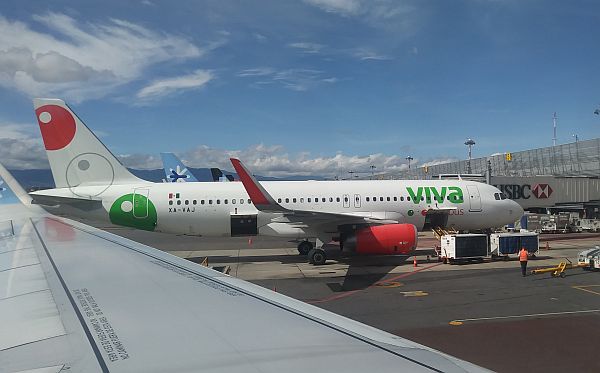
RTW flights

Seeing a pattern here? Major world capitals and competitive big airports continually show up on the lowest-priced itineraries. See if where you want to go most is near one of those.

Shorter Routes to Consider

If you don’t have your heart set on actually circling the globe, you can often hit more destinations with a “circle the Pacific,” “circle the Atlantic” or “tour the Americas” option that makes a loop. This route, for example, can come in under $2K if you time it right:

Miami – Sao Paulo – Buenos Aires – Santiago – La Paz – Lima – Bogota – Miami

Shave it down to as low as $1,200 with this shorter route:

Miami – Guatemala City – San Jose (Costa Rica) – Lima – Bogota – Miami

This one skirting the Atlantic starts at $1,849:

New York – Bogota – Rio de Janeiro – Paris – Madrid – New York

The Most Expensive Round-the-World Tickets

First of all, the way to blow the most on these tickets is to buy them through one of the airline alliances. You’ll invariably pay more, have fewer choices, and have more restrictions. Unless you can pay for it with miles, it’s a raw deal for all but the simplest routes, and only then if you can get mileage that will bump you up to elite status. (That in itself is worth a lot.)

Otherwise, the southern hemisphere can really sock it to you. “I think the most unexpected costs are when people try to travel across the South Pacific—Australia/New Zealand to South America and vice versa—especially when stopping over in remote places such as Easter Island and Tahiti. A dearth of airlines serve those spots,” says Nico.

For this route, the price goes up to a range of $3,724 to $4,350:

Los Angeles – London – Nairobi – surface – Dar Es Salaam – Johannesburg – surface – Cape Town – Kuala Lumpur – Sydney – Nadi (Fiji) – Los Angeles

“Strangely, stopping in Hawaii on a trans-Pacific journey gets pricey, as does island hopping in Micronesia and that area.

Trans-Africa flights are notoriously expensive (i.e., flights between countries in sub-Saharan Africa). Try to do more than a few and you’ve got a major case of sticker shock. People tend also to think they can add Africa for a song, but it’s not really true. Northern Africa is better and also Kenya, but things get more complicated trying to do more than one or two African cities. Getting down to South Africa and its region will always spike a ticket price, as will Victoria Falls. We’ve actually got good prices to get to Maldives and Seychelles on Emirates though.

Also trying to hop around the USA (depending on the season, of course) makes prices jump. Keeping a U.S. itinerary to no more than three stops helps.”

around the world flight

Hitting every continent–a crazy idea if you only have a year anyway–will really blow the budget. Those options start at $5,344.

If you do want to get to these other regions that add on a lot, consider alternate methods to flying and look at other ideas such as package tours that bundle hotels and flights together (like from London to Morocco). Within Europe you can easily hop a train or take a budget flight booked at the last minute to add another city.

Airtreks’ RTW planning section of the site is a goldmine for anyone pondering a trip around the world. Check it out and save yourself a lot of headaches (and money).

Changi

When you spend some time in Singapore’s Changi Airport, it kind of makes you sorry for everyone else. Just as Singapore Air is so superior to most others (especially in economy class) that it’s not really a contest, the country’s airport has no real competition. It’s so much more passenger-friendly than any other that it makes most other international gateways look like amateur hour.

On the basics alone it puts sad places like LAX, Heathrow, and JFK to shame. Luggage carts are widely available and free. Information kiosks are in every terminal section, they’re always staffed, and the people in them actually know what they’re talking about. The whole place is impeccably clean, including the bathrooms. There are mall-type directories everywhere pointing out every shop, restaurant, and airline lounge, plus there’s a printed map you can pick up and carry with you. Luggage arrives in a time period that shows you there have been no staff cutbacks and it’s the same at immigration. Wi-Fi is free throughout the airport and the drinking water is purified.

All that would be commendable, but it’s just the baseline of what should be expected anywhere. On top of that comes cake and icing.

sunflowers

This is the kind of airport you can spend six hours in, as I did recently, and be glad about it. You can actually go outside here and enjoy one of several gardens. There’s a garden that features cacti, one with sunflowers, one with orchids, and another with ferns. Two koi ponds are inside and there are lots of real plants. It keeps getting better though. There’s a movie theater, an MTV zone, and areas with Xbox and Playstation games. If you aren’t carrying a laptop or tablet, no problem—there are large computer kiosks all over the place. And all of this is freeXbox Kinect

Bring your bathing suit in your carry-on if you’ve got a long layover because there’s a rooftop pool outside and a whirlpool. There are plenty of other welcome features for parents, like a huge play area that has slides and TVs.

But wait, there’s more!

Many airports have charging stations, but the ones here allow you to put your gadget inside, set it to charge, then lock it up and go have a beer. You don’t have to hang out there while it’s juicing up. Go watch some big-screen TV in a comfy chair that has built-in speakers. Postcard kiosks allow you to shoot a photo of yourself and mail it off right there.

charging stationThere’s one cool option that should be prevalent in lots of cities, but isn’t: a free city tour. If you have a long layover and want a taste of Singapore, you can get on a two-hour bus tour that hits the highlights and gives you a sense of the city. It’s a smart strategy as surely some of those people will say, “Nice place” and return someday.

If you don’t mind spending some money, you can get a day pass for a lounge with showers and snacks and while you’re there can set up a massage or a pedicure. The shopping choices are extensive and prices are normal: if you find a lower one in the city itself and bring back the proof, they’re refund twice the difference.

The pleasant experience doesn’t end when it’s time to go to your gate. Here’s a shot of what the seats looked like at mine. No cramped rows of pleather seats separated by armrests. Here you have serpentine seating that’s more like sofas, colorful and clean, with a sense of whimsy and style. Aesthetic beauty shouldn’t be so surprising in an airport, but others have set the bar so low that it usually is.

Singapore travel

See the Changi Airport site for ideas and details.

You’ll usually find the best hotel deals in Singapore through Agoda.com.

Allegiant airlinesOne travel perk of moving to Tampa for a couple years has been a big improvement in flight options. Besides having lots of airports within a 4-hour drive if needed, one 30 minutes away is a hub for Allegiant Air.

Never heard of them? I hadn’t either before moving here, but it’s a godsend for people living in small and mid-sized cities in the U.S. who want to get someplace warm and sunny in a hurry. If flies direct from St. Peterburg/Clearwater airport (with the yummy abbreviation of PIE) to all kinds of places with normally crappy air connections. Places like Lexington, KY; Roanoke, VA, Chattanooga, TN; Appleton, WI; Duluth, MN, Greenboro, NC. They also send lots of flights to Myrtle Beach, Ft. Lauderdale, and Orlando, plus you can get from Florida all the way up to Niagara Falls direct, which would be an easy way to get to Canada too. They have other hubs in Orlando, Ft. Lauderdale, Ft. Meyers, and five cities out west. See the full route map here.

Their fares are routinely lower than anyone else’s by a wide margin, so besides the time factor, the price is enticing too. Just one problem though: you’ll pay for everything after that. Like Spirit and RyanAir, Allegiant looks at the airfare as a base. It’s the starting point from which they pile extra fees on top of to make the real money. So you’ll pay for anything to drink, a seat assignment, using your credit card, and even a carry-0n if you bring a bag.

Allegiant Bag Fee Blues

Is there any way to avoid all this? Well you can avoid eating/drinking in flight and take your chances on a seat upon arrival—probably ending up in the middle. You can use a debit card instead of a credit card. And you can pack lightly. Really lightly.

I’ve now done four flights on Allegiant without paying a bag fee. It wasn’t easy and when I head to a wedding in October where I have to dress up, I’ll pay up to bring a real suitcase. These two trips were just for a long weekend to hang out with my father though, leaving on a Friday, returning on a Monday. The photo here shows the back I packed and my secret weapon—a Scottevest.

baggage fees

Allegiant and Spirit Air both say to avoid baggage fees, your “personal item” must fit under the seat in front of you. Apparently Allegiant Air’s seats are smaller than Spirit’s because while the latter allows dimensions of 16 by 14 X 12 inches, Allegiant limits you to 16 X 15 X 7 inches. That’s a tad larger than the size of a laptop bag for those with a 15-inch screen or less.

Obviously there’s more height than 7 inches under the seat, but their rules are rules and they enforce them with vigor. Gate agents were slapping $35 fines, errr, baggage fees, on anyone who dared to carry two items of any size or had a bag larger than these dimensions. (Talk about a horrible job to get up for every day!)

Despite all the luggage  and bags I’ve reviewed at Practical Travel Gear, I had to resort to a trade show schwag bag to find something of this size. It held my laptop, laptop cord, and the following: one pair of Sanuk Rasta Pouch shoes, one extra pair of pants, a pair of shorts, two collared shirts, two t-shirts, three pairs of socks and underwear, and a small toiletry kit. In the outside pocket I had an inflatable travel pillow I ended up not using.

In my Scottevest went everything else not in my pants pockets: phone, iPod, earbuds, keys, portable charger, loose change, sunglasses, ticket, boarding pass, lip balm, etc. It could have held a lot more (like underwear or some toiletries) if I really wanted to push it.

Would I go through all this for a longer trip? No, even for a cheapskate like me who’s got plenty of lightweight travel clothing, it would be hard for a real vacation. But since my option was to pay $64 in fees or have $64 to spend with my dad over the weekend, it was worth it.

After three weeks across the Atlantic and some office time back at home, I’m off to Latin America again to check out Nicaragua.

I wanted to travel down to Nicaragua in the cheapest way possible, which meant a flight on Spirit Air. This is the airline everyone loves to hate, in no small part due to their baggage fee policy, where it takes a herculean effort to travel without paying extra bag fees—on top of the money they ding you for to make any seat reservation. They, along with Allegiant Air, charge you for any bag that won’t fit under your seat, even a small one to put in the overhead bin. I’ve got a whole closet full of bags I’ve reviewed for Practical Travel Gear, but have you ever gotten a tape measure out to see what matches the following specs?

“Personal items (e.g. purse, small backpack, briefcase, etc.) must fit underneath the seat, so the dimensions must not exceed 16 x 14 x 12 inches (40 x 35 x 30 cm).”

If you do, you’ll find that these dimensions bear almost no resemblance to anything you’ve got in your closet—or most anything you’ll find in a luggage store except those ones the airline workers carry. Even a lot of laptop bags are larger than this: to accommodate a standard 15.6-inch screen with space to spare puts them over 16 inches.

So the editor of the leading travel gear blog is traveling to Nicaragua with…a free trade show schwag bag. It’s basically a big compartment with one zipper and two handles. (Looks like I’ll be advertising Viking River Cruises along the way since they’re printed on the side.)

Thankfully, I’ve got plenty of experience in packing light, plus I’ve got my Sea to Summit duffel bag that compacts down to a size small enough to fit in my palm. I’ll put that inside and then expand my baggage on the other end, like one of those little foam dinosaurs you put into water and they get bigger. I’ve also got this Eagle Creek backpack that folds up into a little pouch. That’ll expand on the other end to be my daypack.

My other secret weapon is a pair of P^Cubed business pants that are not only pickpocket proof, but are also treated with Teflon. So for a week of travel, I’m wearing those on the plane and bringing one other pair of pants (same color, for matching) that’s convertible so I’ll have shorts along as well. A bathing suit, another pair of shoes, quick-dry shirts that can be sink-washed, ExOfficio underwear, and compact cosmetics in a small toiletry kit. Laptop because I’m working—if this were vacation I’d probably leave it behind—music player, phone, notebook, guidebook, Callpod charger, and camera. A tight squeeze, but doable.

The $70 I’m saving on baggage fees will go a loooonnng way in Nicaragua. With that amount I could buy about 18 lunches, a week’s hostel lodging, or 10 bottles of 7-year Flor de Cana rum…

This year I’m flying round-trip to Budapest, round-trip to Southeast Asia, and probably to South America and back—without buying plane tickets. No, I’m not going to any of those places on a press trip: I’m cashing in miles.

Many people are surprised to hear that I’ve never attained elite status on any airline. I rarely see the front cabin of the plane. It’s not that I don’t fly a fair bit, but it’s generally a mix of different airlines and there aren’t enough really long-haul flights in there to add up to 25,000 or more miles accrued in one year.

It’s also partly because I get a lot of free flights by the judicious earning and use of frequent flier miles. In the past I’ve flown gratis to Argentina, Peru, Mexico, and a half-dozen places in the U.S. This year I’m flying for free round-trip to Eastern Europe and Southeast Asia. Here’s how much Continental says just my second leg from Hanoi to New York would have cost if I’d bought this route (on Singapore Air) outright:

free flight

Yowza! Obviously I wouldn’t have taken that route and spent so much on my own dime, but that fact I was able to do it for 32,500 miles shows what kind of value you can get out of travel hacking. It can make a massive difference in how much it’s going to cost you to take an international journey.

How I did it – quick case studies

1) Free flight to Europe. My first free flight is going to be in April/May, when I’m going to Budapest and back and visiting three other countries overland. That was 40,000 miles on American Airlines. This barely put a dent in my AAdvantage balance. Sure, I’ve flown them and their partners now and then, but I pumped up the balance in a huge way by getting both a personal and business AA credit card from Citibank. The first gave me a bonus of 30,000 miles after spending a few hundred bucks on it. The second one took more effort—I had to spend $4,000 in six months on it—but I used it to buy things I was going to pay for anyway and put my rent on there one month to get over the hump. For that I earned a staggering 75,000 miles bonus.

Now I’ve got enough left to fly to South America and back (or one-way in business class) and still have leftovers. And I keep earning miles when I use the card, miles when I fly, miles when I dine out at the right restaurants, etc. Join the Travel Hacking Cartel and you’ll get regular updates on how to cash in regularly.

Hungary travel

2) Free flight to Bangkok and back from Hanoi. The carrier I use most often (besides Southwest) has traditionally been Continental, now merged with United. That’s because it has better Latin America coverage than most, especially Mexico, going through Houston on the way. Because of the great Star Alliance they belong to, you can cash in Continental/United miles for all kinds of other great airlines. So I’m flying from Tampa to Bangkok with my family—all of us free—on a combination of United and Thai Airways. They’re having to buy a one-way home, but I’m coming back from Hanoi on mileage. It’s going to be a very long trip via Singapore and Frankfurt, but on the best airline if you’re going to be stuck in economy: Singapore Airlines. I couldn’t get any closer to home than D.C. though, so I took the flight to NYC and will see a couple friends before the last leg on a cheap one-way ticket to Florida.

How did I manage this? Again, a mix of flying, credit cards, and other moves. All three of us have been saving up miles for a while, so my wife was able to transfer some from her account to my daughter’s for $75. And I had to spend $35 to top off my account to get to 65,000. And we each paid the taxes, which were around $40 each way. But considering even a one-way flight from where we live to Bangkok is $1,400 and rising, not bad. What put both my wife and I over the top on miles though was getting an airline credit card from Chase that gave us 30,000 miles each. (And it lets us check in one bag free on domestic flights.) Almost enough on its own for a one-way flight to Southeast Asia and close to what you need for a round-trip to South America or Europe.

I also have regularly bought things through their mileage mall online, taken advantage of special promotions, and earned a bit here and there from car rentals and hotel stays. I even got 1,000 miles once from installing a shopping toolbar then taking it down a couple months later. I found out about some of these opportunities from blogs, others from the Cartel.

3) South America in the Fall. I’m going on a tour through Bolivia and the Atacama Desert of Chile in November. I’m having trouble finding a free flight into Bolivia at any time, but if nothing else I know I can get home from Chile on miles as there is plenty of availability. Once again, a little extra effort up front will dramatically reduce my travel costs when it’s time to fly. With the price of oil continuing to go up and the U.S. economy improving, flight prices are unlikely to get any cheaper. It pays big dividends to use another currency besides your income.

Atacama Chile

The Travel Hacking Cartel

As I’ve said before, if you’re experienced at this and don’t mind browsing lots of different blogs and message boards on a weekly basis, you can find lots of tips and tricks for free. If your time is precious though and you’d like for it all to just land in your inbox—with some hotel points deals as well—then a Travel Hacking Cartel subscription is an easy investment to justify. They guarantee you enough points to get four free domestic tickets a year or you get your  money back. Where would you go with 100,000 miles? And is it worth less than 10 bucks a month to get there?